
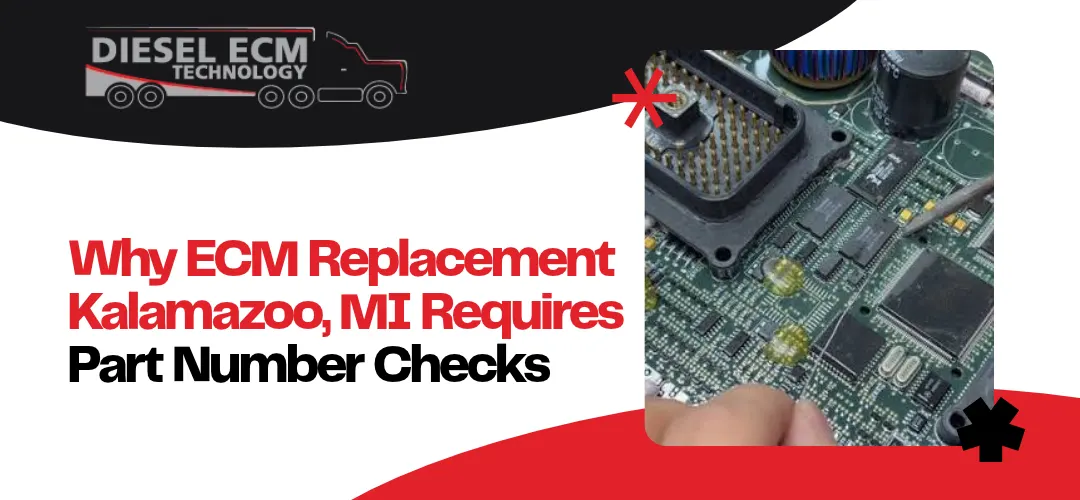
Learn why ECM replacement Kalamazoo, MI requires part number checks, engine verification, and programming before ordering a replacement.
Excessive heat can place serious stress on a diesel engine’s electronic control module (ECM). Repeated exposure to high temperatures may weaken internal connections, damage circuit-board components, and cause intermittent engine problems. Diesel ECM repair Grand Rapids, MI helps truck owners identify these electronic faults and determine whether the original module can be repaired or needs replacement.
Recognizing heat-related problems early can help reduce unexpected downtime. However, similar symptoms may also result from faulty wiring, sensors, or cooling-system issues. Accurate testing is essential before deciding which repair is necessary.
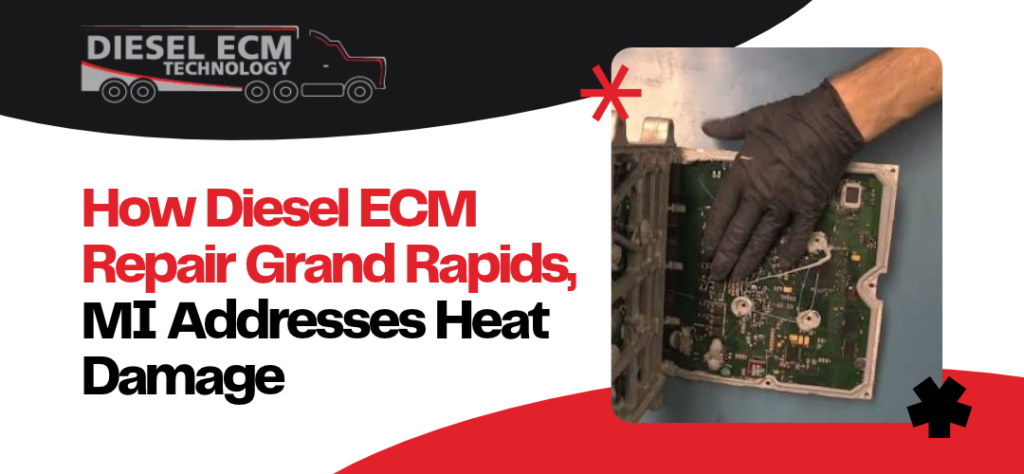
An ECM processes information from engine sensors and manages important functions such as fuel delivery, injection timing, and engine performance. Its circuit board contains sensitive electronic components designed to operate within specific temperature limits.
Repeated exposure to excessive heat can weaken solder connections, damage circuit traces, affect capacitors, and shorten component lifespan. Thermal expansion and contraction may also contribute to connection failures over time.
Heat damage does not always cause immediate failure. A truck may operate normally when cold but develop intermittent problems after reaching operating temperature. These issues can become more frequent as internal damage progresses.
Repairing physical damage is only one part of restoring engine control. The module must also retain the correct software configuration for the specific engine and vehicle. Depending on the repair, technicians may need to verify calibration data and confirm communication with other systems.
Diesel ECU reprogramming Grand Rapids, MI may be necessary when software configuration requires attention. However, programming cannot repair burnt circuitry or failed hardware. Technicians must first establish whether the problem is electronic, software-related, or caused by another vehicle system.
After repairs, bench testing helps verify the module’s operation before it returns to service. Testing should examine relevant functions and communication behavior rather than simply checking whether the ECM powers on. This process can help identify problems that might otherwise appear after installation.
The right solution depends on the circuit board’s condition and the extent of internal damage. If the failure involves repairable components or damaged connections, restoring the original ECM may be a practical option. Depending on the module, this may also help preserve its existing vehicle-specific configuration.
Severe circuit-board damage, however, may make restoration impractical. A compatible remanufactured or replacement unit may then be more suitable. Semi truck ECM replacement Grand Rapids, MI requires careful attention to engine compatibility and programming requirements.
Truck owners should provide accurate engine information when requesting a replacement. The engine serial number, existing module details, and relevant aftermarket modifications can help determine the correct configuration. Confirming these details before ordering reduces the risk of receiving an unsuitable module.
Repairing the module does not automatically resolve conditions that contributed to overheating. Truck owners and fleet managers should also maintain surrounding vehicle systems.
These checks cannot prevent every electronic failure, but they can help identify conditions that contribute to recurring faults.
A structured inspection helps technicians determine whether the ECM is responsible for engine performance problems. Commercial truck diagnostics Grand Rapids, MI can help identify communication faults, electrical irregularities, and related system issues that may resemble internal module failure.
For fleet operators around Grand Rapids, Holland, South Haven, and Wayland, identifying the actual cause can prevent unnecessary parts replacement and delays. Testing the vehicle and, when appropriate, the removed module helps establish whether repair, reprogramming, or replacement is the next practical step.
The objective is to identify the source of the fault, confirm the module’s condition, and verify that the completed repair addresses the problem.
Diesel ECM Technology serves West Michigan from its base in Wayland, MI. The company provides Detroit Diesel and Cummins ECM repair, component-level hardware work, bench testing, programming, and remanufactured modules for on-road, off-road, marine, and industrial applications. Its published service information also lists a 12-month warranty for repaired and remanufactured ECM solutions. Truck owners around Grand Rapids and nearby communities can ask about available local service or mail-in repair options based on their module and engine requirements.
Contact Diesel ECM Technology at 616-306-0767 to discuss your ECM issue and available repair options.
Yes. Repeated exposure to excessive heat can damage electronic components, solder connections, and circuit-board traces. Testing is needed to determine whether heat caused the failure.
It may continue running if the damage is intermittent or affects only certain circuits. Some trucks experience power loss, stalling, starting problems, or communication failures as operating temperatures increase.
Not always. If the original software and configuration remain intact, additional programming may not be necessary. The module's hardware and software should be checked after repair.
The decision depends on the extent of internal damage, module compatibility, and repair feasibility. Component-level testing helps determine whether the original unit can be restored or replacement is more appropriate.
Maintain the cooling system, inspect wiring and connectors, keep the module properly mounted and protected, and address overheating warnings promptly. Regular inspections can help identify problems before they contribute to electronic failure.
Learn why ECM replacement Kalamazoo, MI requires part number checks, engine verification, and programming before ordering a replacement.

Explore how ECM module repair Kalamazoo, MI can reduce replacement costs through diagnostics, component repairs, and compatibility checks.
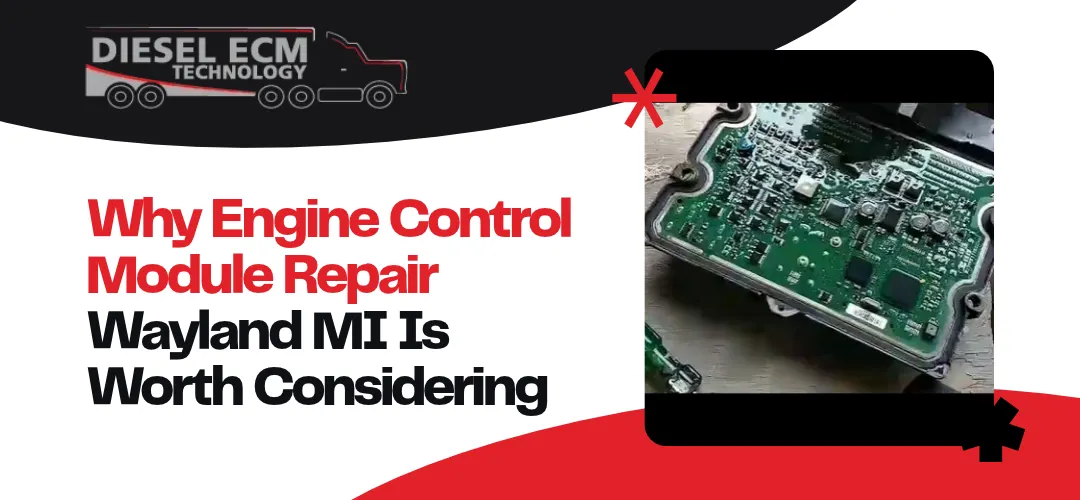
Learn why engine control module repair Wayland MI is worth considering. Explore warning signs, repair costs, diagnostics, and testing.
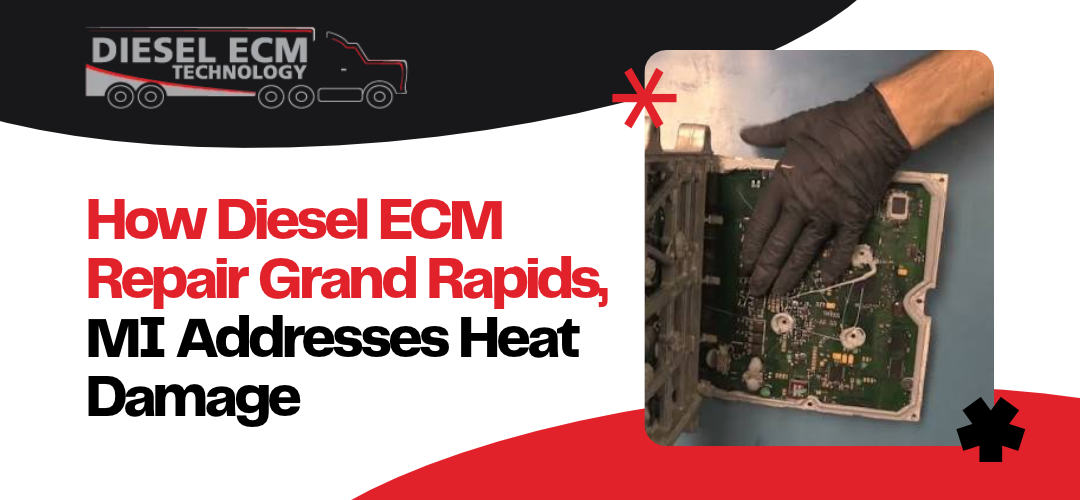
Learn how diesel ECM repairs Grand Rapids, MI identifies heat damage, tests electronic components, and helps restore reliable truck performance.
How Semi Truck ECU Diagnostic Check Wayland, MI Finds Faults Engine control problems can affect starting, acceleration, fuel delivery, and...
How Semi Truck ECU Diagnostic Check Wayland, MI Finds Faults A truck that loses power, struggles to start, or displays...
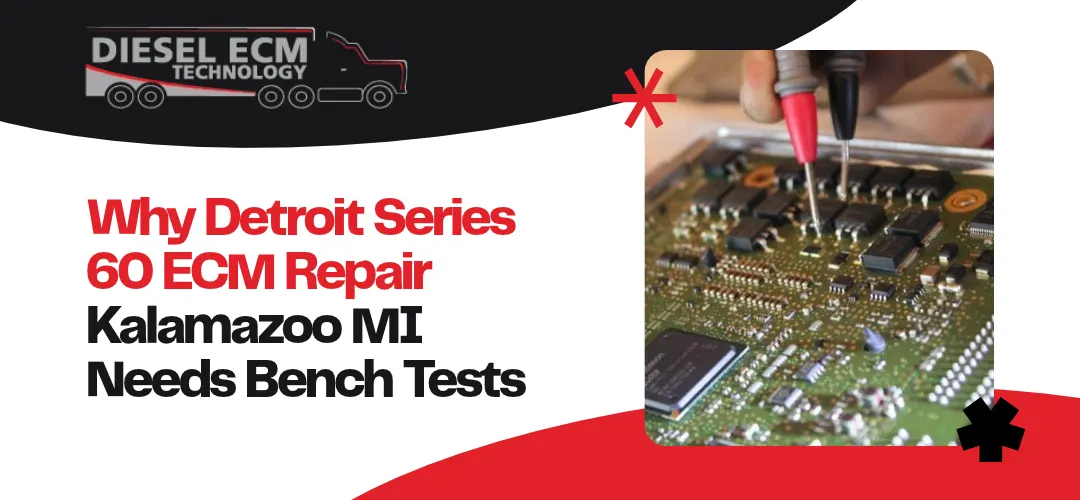
Learn why Detroit Series 60 ECM repair Kalamazoo MI requires bench testing to identify electrical faults, verify performance and repairs.
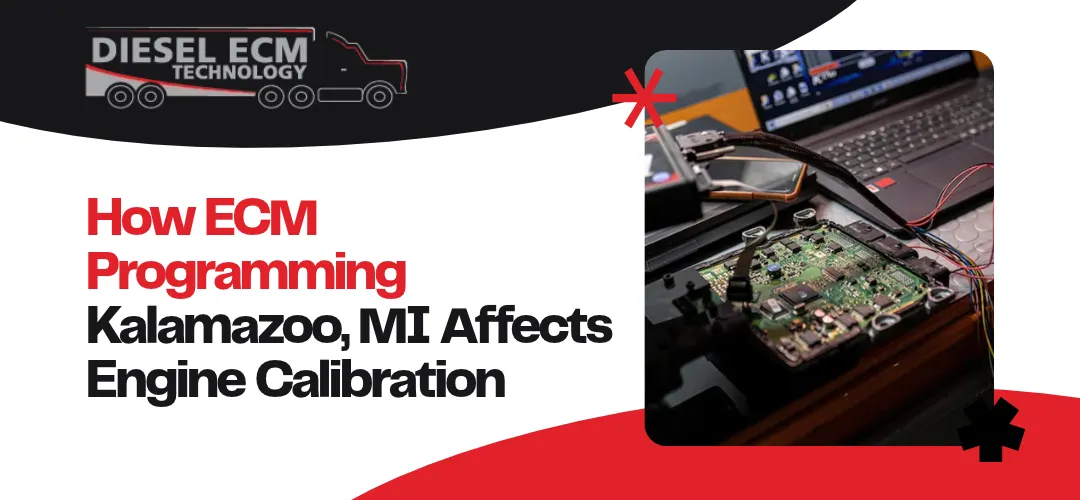
Learn how ECM programming affects diesel engine calibration, module compatibility, engine performance, and reliable operation after replacement or repair.
What to Send for Engine Control Module Repair Kalamazoo, MI When an engine control module (ECM) develops a problem, sending...